G Chord on Guitar: 4 Easy Ways to Play It
The G chord is one of the first chords most guitarists learn and one of the most used in folk, rock, pop and country. Pick a shape below to see where to put your fingers and which note each string plays.
How to play the open G chord
- Put your middle finger on the 3rd fret of the low E string (6th string).
- Put your index finger on the 2nd fret of the A string (5th string).
- Put your ring finger on the 3rd fret of the high e string (1st string).
- Leave the D, G and B strings open and strum all six strings.
Press just behind the fret wire, not on top of it, and keep your fingertips arched so the open D, G and B strings ring clearly. Pick each string one at a time to check that none of them is muted.
What notes make up G major?
A G major chord has three notes: G (the root), B (the major third) and D (the perfect fifth). The open G shape plays them as G–B–D–G–B–G from the low string to the high string, so the root appears three times, which gives this chord its full sound.
Four G chord shapes compared
G with D on the B string
Adding the 3rd fret of the B string (a D note) with your ring finger, and moving the high e note to your pinky, gives a slightly fuller sound. Many players prefer it because the same fingers lead easily into C and D chords.
Easy one-finger G
Beginners can play just the top four strings with one finger on the 3rd fret of the high e string. It is a real G major chord, but the lowest note is D instead of G, so it sounds lighter. Use it while you build up to the full shape.
G barre chord at the 3rd fret
This is the E-shape barre chord moved up to the 3rd fret, with the index finger pressing all six strings. It plays G–D–G–B–D–G from low to high, and because it has no open strings the same shape can be moved to any fret to play other major chords.
Chords that go with G
In the key of G major the chords are:
| Degree | I | ii | iii | IV | V | vi | vii° |
|---|---|---|---|---|---|---|---|
| Chord | G | Am | Bm | C | D | Em | F♯° |
The three major chords G, C and D are neighbors on the circle of fifths, which is why progressions like G–C–D, G–D–Em–C and G–Em–C–D are used in so many songs.
Why your G chord buzzes or sounds muted
- Muted B string: the index finger on the A string is leaning on the B string. Arch the finger more.
- Buzzing on the low E: move the middle finger closer to the 3rd fret wire and press a little harder.
- Hand strain: keep your thumb behind the neck, roughly behind your index finger, instead of squeezing.
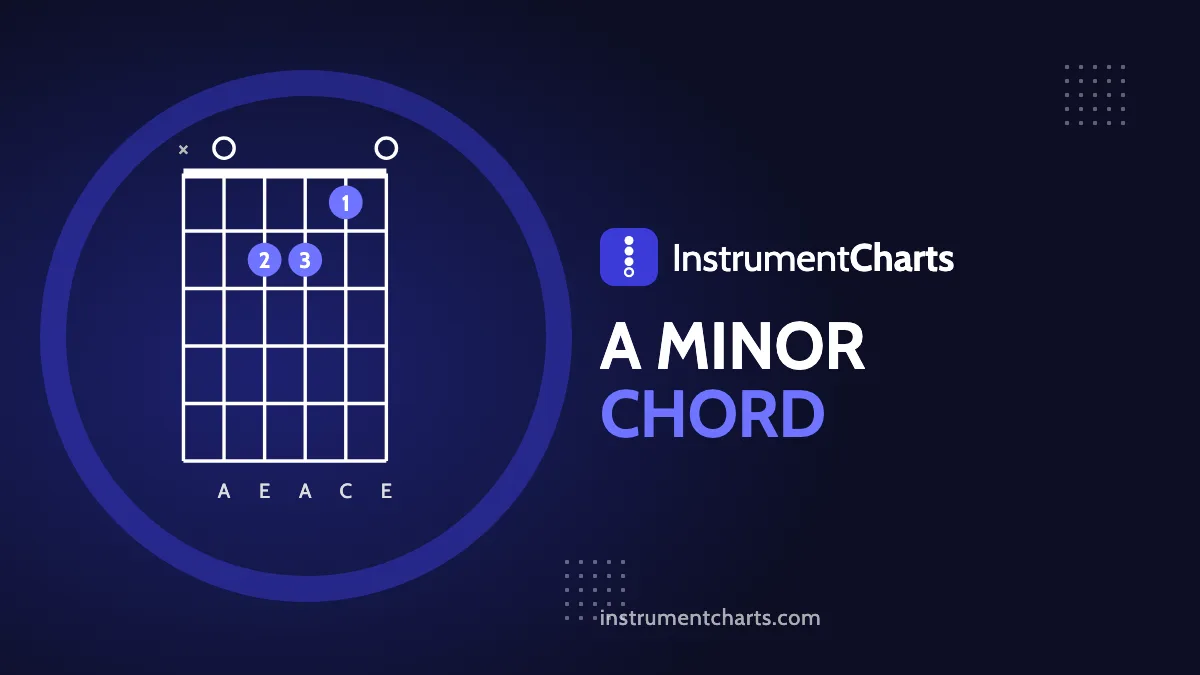
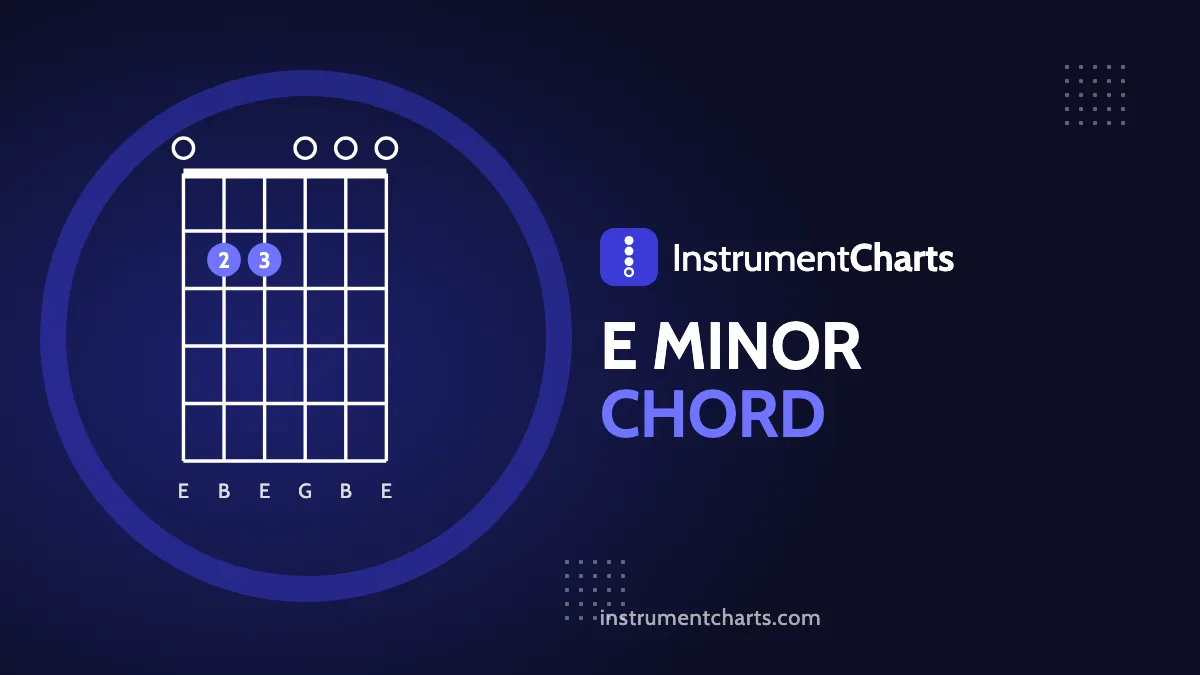
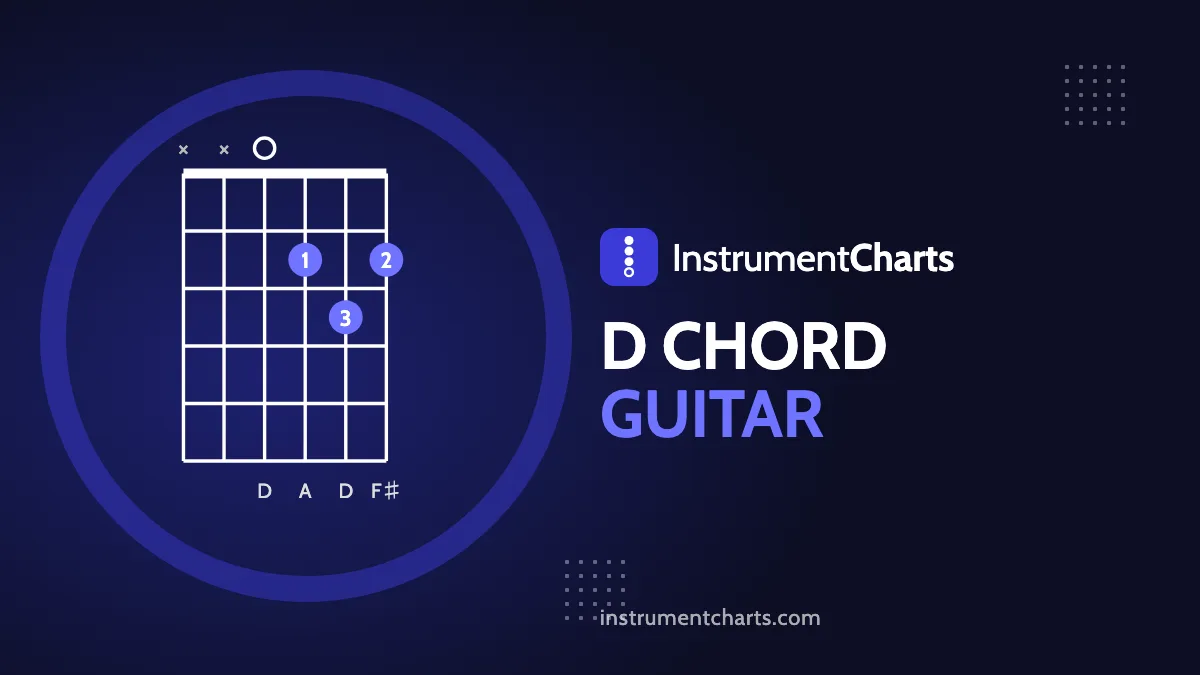
Next chords to learn: C chord and A chord. In the key of G you will also need D and E minor. To see every key and its chords, use the interactive circle of fifths.
Frequently asked questions
What notes are in a G chord?
G, B and D. The open G shape plays G–B–D–G–B–G from the 6th string to the 1st.
Which fingers do I use for G?
In the most common fingering, the middle finger plays the 6th string at the 3rd fret, the index finger the 5th string at the 2nd fret and the ring finger the 1st string at the 3rd fret. Some teachers use ring, middle and pinky instead, which makes the change to C easier.
Is there an easier way to play G?
Yes. Play only the top four strings with one finger on the 3rd fret of the high e string. It is still a G major chord, with D as the lowest note.
How do I play a G chord with a capo?
With a capo on the 2nd fret, the G shape sounds as an A chord, because every note moves up two semitones. To get a G sound with a capo on the 2nd fret, play an F shape instead.
Sources
- Fender, How to Play the G Chord on Guitar — standard fingerings compared shape by shape.
- Guitar chord (Wikipedia)
- Standard tuning E–A–D–G–B–E (Wikipedia)
- Major chord: root, major third, perfect fifth (Wikipedia)
- Every shape on this page is checked by script: the notes on each fretted and open string are calculated from standard tuning and must match the chord’s notes exactly.