E Chord on Guitar: Open, Easy and Barre
E major uses all six strings and has a deep, full sound that suits rock and blues. Pick a shape to see how to play it and which note each string sounds.
Playing the open E chord
- Index finger on the 1st fret of the G string (3rd string).
- Middle finger on the 2nd fret of the A string (5th string).
- Ring finger on the 2nd fret of the D string (4th string).
- Strum all six strings.
E is often one of the easiest full chords, because all six strings are played and the fingers sit close together near the nut.
The notes E, G♯ and B
E major is E (root), G♯ (major third) and B (fifth). The open shape gives E–B–E–G♯–B–E, with three E notes, including both open E strings.
More ways to play E
Easy E on four strings
Play only the D, G, B and high e strings, with two fingers: the middle finger on the 2nd fret of the D string and the index on the 1st fret of the G string. It is a complete E major chord for players building finger strength.
E as a barre chord
The A-shape barre at the 7th fret and the full six-string E shape moved up to the 12th fret play E higher on the neck. The open E shape itself is the template for every E-shape barre chord: slide it up and add a barre.
Chords in E major
| Degree | I | ii | iii | IV | V | vi | vii° |
|---|---|---|---|---|---|---|---|
| Chord | E | F♯m | G♯m | A | B | C♯m | D♯° |
E major has four sharps (F♯, C♯, G♯ and D♯). Blues in E usually uses E, A and B, the I, IV and V chords from this table.
Fixing an E chord that buzzes
- Open G string dead: the index finger is flat; arch it.
- Buzz on the A or D string: move the middle and ring fingers closer to the 2nd fret wire.
- Open B string muted: the ring finger is touching it from underneath.
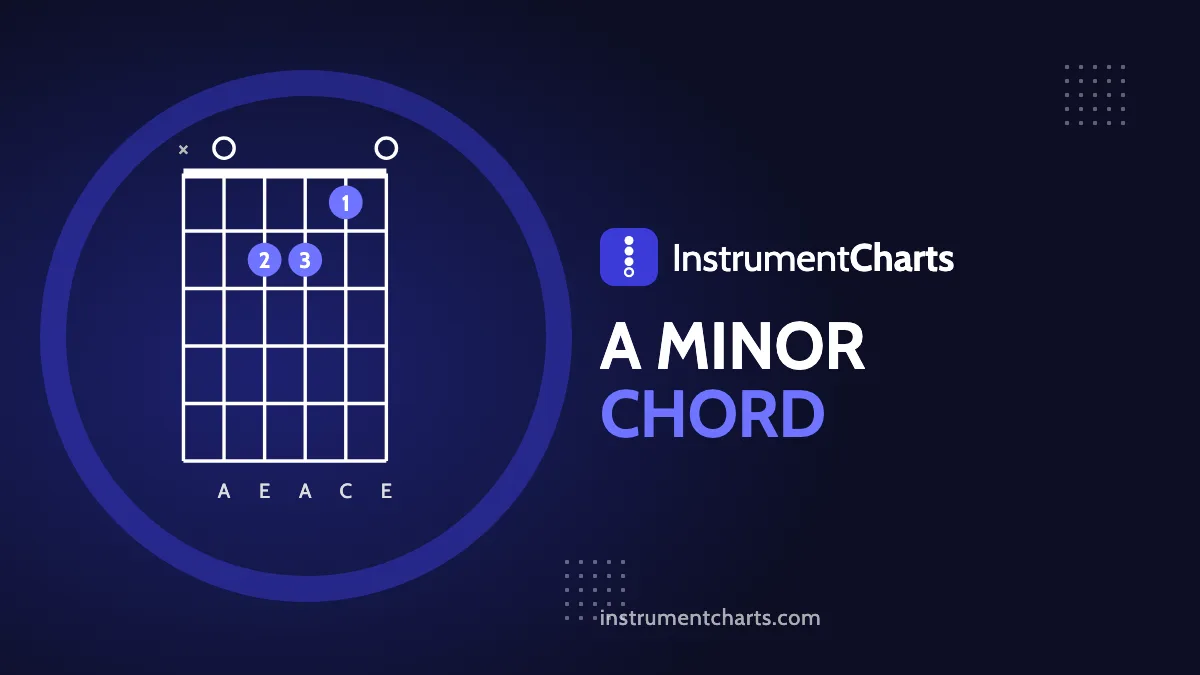
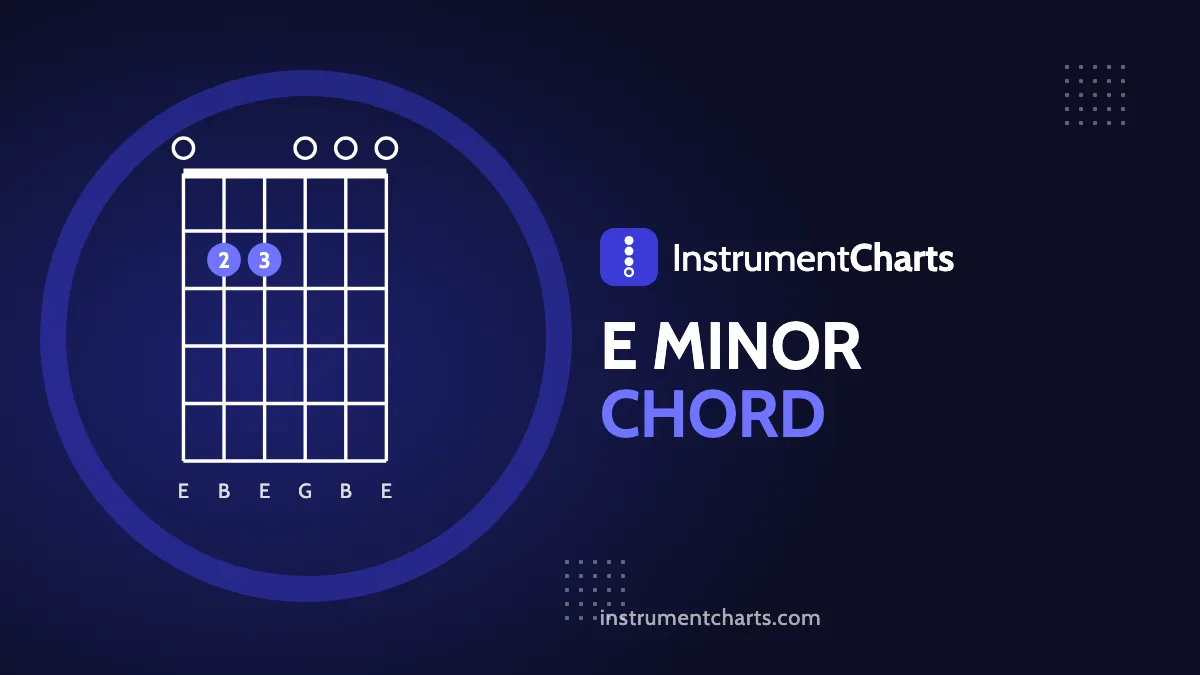
Switch to the minor version by lifting one finger: see E minor. E is the V chord in the key of A, so practise it with the A chord.
Frequently asked questions
Why does the open E chord sound so full?
All six strings ring, the root E is the lowest note, and the chord contains three E notes across two octaves plus the open B and E strings, which resonate freely.
Do you play all six strings on E?
Yes. Every string plays a chord tone, including both open E strings.
Why is E important for barre chords?
The E-shape barre chord is the open E shape moved up the neck with the index finger as a barre. At the 3rd fret it plays G, at the 5th fret A.
Which songs use E?
E is very common in rock and blues because the open strings ring out; in the key of E the I–IV–V chords are E, A and B.
Sources
- Fender guitar chord lessons
- Major chord: root, major third, perfect fifth (Wikipedia)
- Guitar chord (Wikipedia)
- Standard tuning E–A–D–G–B–E (Wikipedia)
- Every shape on this page is checked by script: the note on each played string is calculated from standard tuning and must match the chord’s notes exactly.